Microplastics in Food: What the Science Says and Why Responsible Packaging Still Matters
February 2, 2026
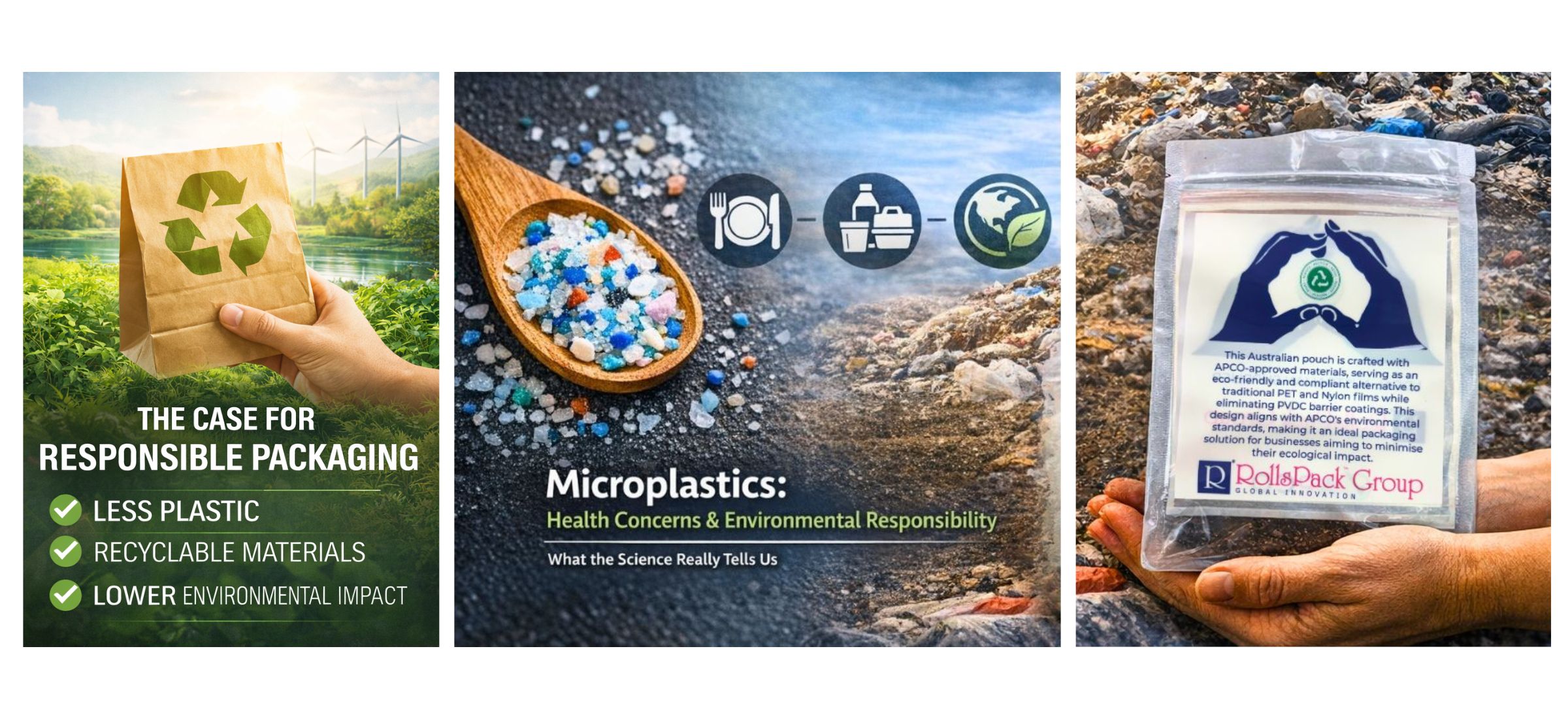
Microplastics in food have become a growing area of concern because they sit at the intersection of health, packaging, and environmental impact. As awareness increases, questions naturally follow. What are we actually exposed to? And what does the science really tell us?
When you step away from assumptions and look at peer-reviewed research, the picture is more measured than many people expect.
How much microplastic do we actually ingest?
Scientific reviews examining dietary exposure to microplastics consistently show that intake levels are extremely low. By mass, estimated exposure is measured in micrograms per week, an amount so small it is often compared to a fraction of a grain of salt spread over an entire lifetime.
More importantly, most ingested microplastics pass through the body rather than accumulating. Studies suggest that approximately 99 percent are excreted. This doesn’t mean the topic should be ignored, but it does challenge the idea that microplastics in food represent an immediate health risk under real-world conditions.
In practical terms, everyday exposure levels are far lower than the concentrations often used in laboratory studies that report potential toxicity.
Why laboratory studies can sound more alarming than reality
Much of the concern around microplastics comes from studies designed to test theoretical risk. These experiments often involve exposure levels that are significantly higher than what people encounter through food.
While this research is valuable for understanding biological mechanisms, it doesn’t always reflect real-world intake. When actual dietary exposure data is considered, current evidence indicates that microplastics in food are not considered a significant risk to human health at present levels.
Science continues to evolve, and ongoing research is important. But decisions should be informed by measured exposure, not worst-case assumptions.
Does this mean plastic isn’t a problem?
Not at all.
Low immediate health risk does not mean low environmental impact.
Plastic waste remains a serious sustainability challenge. When plastic is poorly designed, misused, or improperly managed at end of life, it contributes to pollution across land and marine environments. Microplastics found in waterways, soil, and oceans are a symptom of how materials move through the system once discarded.
This is where the conversation shifts from health fear to environmental responsibility.
Why packaging decisions still matter
Packaging plays a critical role in protecting food, extending shelf life, and reducing spoilage across the supply chain. At the same time, packaging choices directly influence waste outcomes.
Responsible packaging focuses on:
-
Using materials that are fit for purpose, not excessive
-
Improving recyclability and compatibility with existing systems
-
Reducing unnecessary layers and problematic coatings
-
Supporting circular economy principles rather than single-use disposal
At RollsPack, sustainability is guided by responsibility rather than alarm. The goal is to balance performance, safety, and environmental impact using evidence-led design decisions.
Separating health risk from environmental responsibility
It’s easy for conversations about microplastics in food to blur two very different issues: human health risk and environmental impact. Keeping that distinction clear is essential.
Current science suggests dietary exposure is minimal. Environmental consequences, however, depend heavily on how packaging is designed, used, and recovered after use. Addressing plastic waste at its source will always have a greater long-term benefit than reacting to fear-driven narratives.
Moving forward with perspective
What this really comes down to is balance.
Yes, microplastics should continue to be studied.
Yes, plastic pollution remains a genuine environmental issue.
And yes, businesses have a responsibility to continuously improve how packaging is designed and managed.
But sustainability decisions are most effective when they are grounded in data, context, and long-term outcomes, not panic.
Responsible packaging is not about doing less. It’s about doing better, with clarity and intent.